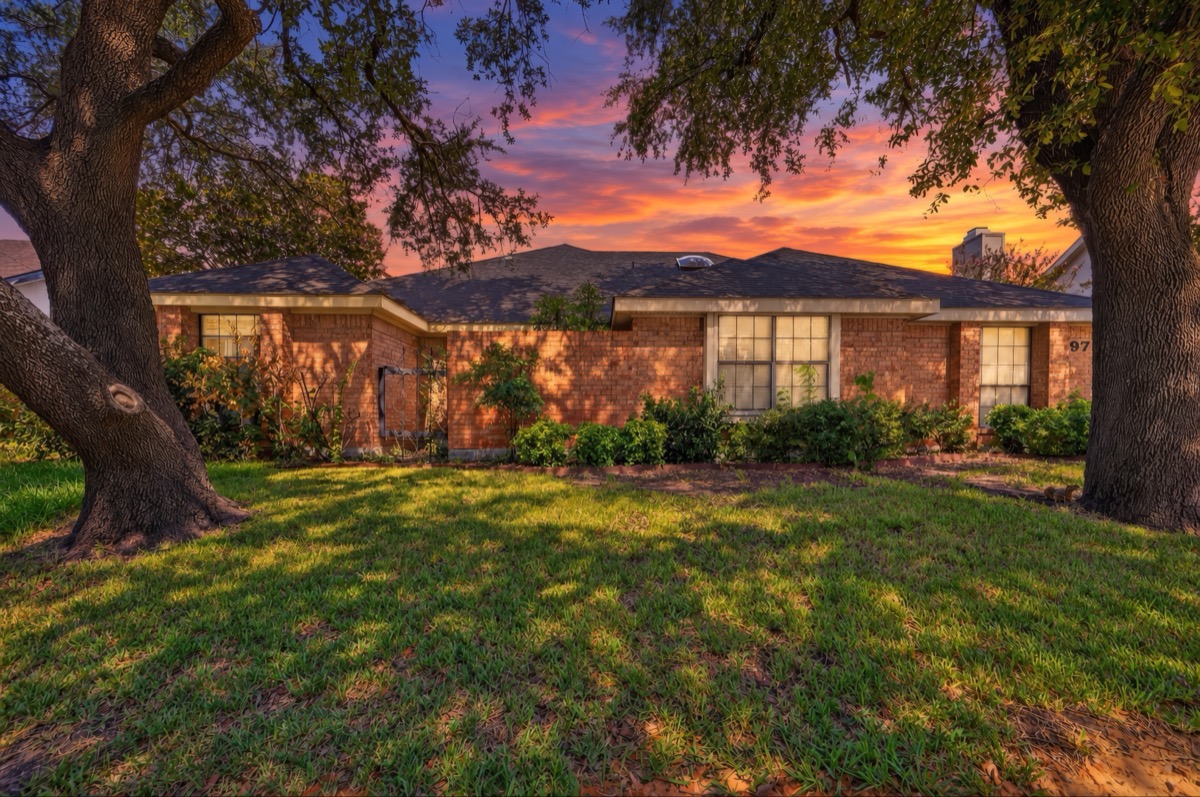
Duplexes come up constantly in conversations with investors and first-time buyers in DFW, but most of the content written about them is abstract. Here is a concrete example, using a side-by-side duplex I currently have listed on Springtree Lane in Dallas, to walk through how the economics actually work.
What makes a duplex different from a single-family rental
A duplex is one structure split into two separately deeded or separately addressed units, each with its own entrance. In DFW, you will see them most often in older inner-ring suburbs like this Lake Highlands pocket of Dallas, built in the 1970s and 1980s when that housing type was more common than it is today.
The appeal is simple. You get two rent rolls, or two owner-occupied options, under one roof and often one lot. That changes the math compared to a single-family rental in a few important ways, both for financing and for cash flow.
The Springtree example
The two units at 9711 and 9709 Springtree Lane in Dallas are each 2 bedroom, 2 bath layouts, one a bit larger than the other, both sides of brick construction on one duplex footprint in the 75243 zip code, close to Lake Highlands and with easy access to 635 and Central Expressway.
There are three ways an investor typically approaches a property like this. Buy both units and rent both out as a straight income property. Buy both units and house hack, living in one side while the other covers a meaningful share of the mortgage. Or buy a single unit if the seller allows it, which is less common with duplexes platted this way but worth asking about.
Why the house hack math works here
If you buy both sides and occupy one, the rent from the second unit is doing real work against your total mortgage payment. On a property like this, you are not trying to cash flow significantly from day one. You are trying to live for a fraction of what a comparable single-family home in the same submarket would cost you, while building equity in two units instead of one.
That is a different strategy than a pure rental purchase, and it changes what loan products make sense. Owner-occupant financing on a 2-unit property is still available through conventional and FHA programs, with more favorable terms than a straight investment loan, as long as you actually intend to live in one side.
What to check before buying a duplex
Confirm how the property is platted and whether the units can be sold or financed separately. Some duplexes in DFW are on a single tax parcel, which affects both your exit options and how a lender will treat the deal.
Get real rent comps for the specific unit sizes, not a blended average for the neighborhood. A 1,190 square foot unit and a 1,300 square foot unit next door will rent differently, and the gap matters when you are underwriting the deal.
Walk both units, not just one. Shared walls and a shared roof mean deferred maintenance on one side often has implications for the other. This is the same discipline I walk through in more detail when underwriting a value-add deal, and it applies just as directly to a duplex as it does to a single larger property.
Confirm whether the lot and submarket support rent growth over your hold period. A duplex in a stable, in-demand pocket of Dallas like Lake Highlands carries different long-term risk than the same structure in a declining area, even if the purchase price looks similar.
The bottom line
Duplexes are not a shortcut and they are not for every buyer, but in the right submarket they offer a genuinely useful middle path between a single-family home and a larger multifamily purchase. The Springtree listing is a live example of that math working in Dallas right now, for a buyer who wants to house hack or an investor who wants two units under one roof.
If you want to see the numbers on this property specifically, or talk through whether a duplex fits your goals, reach out directly.